
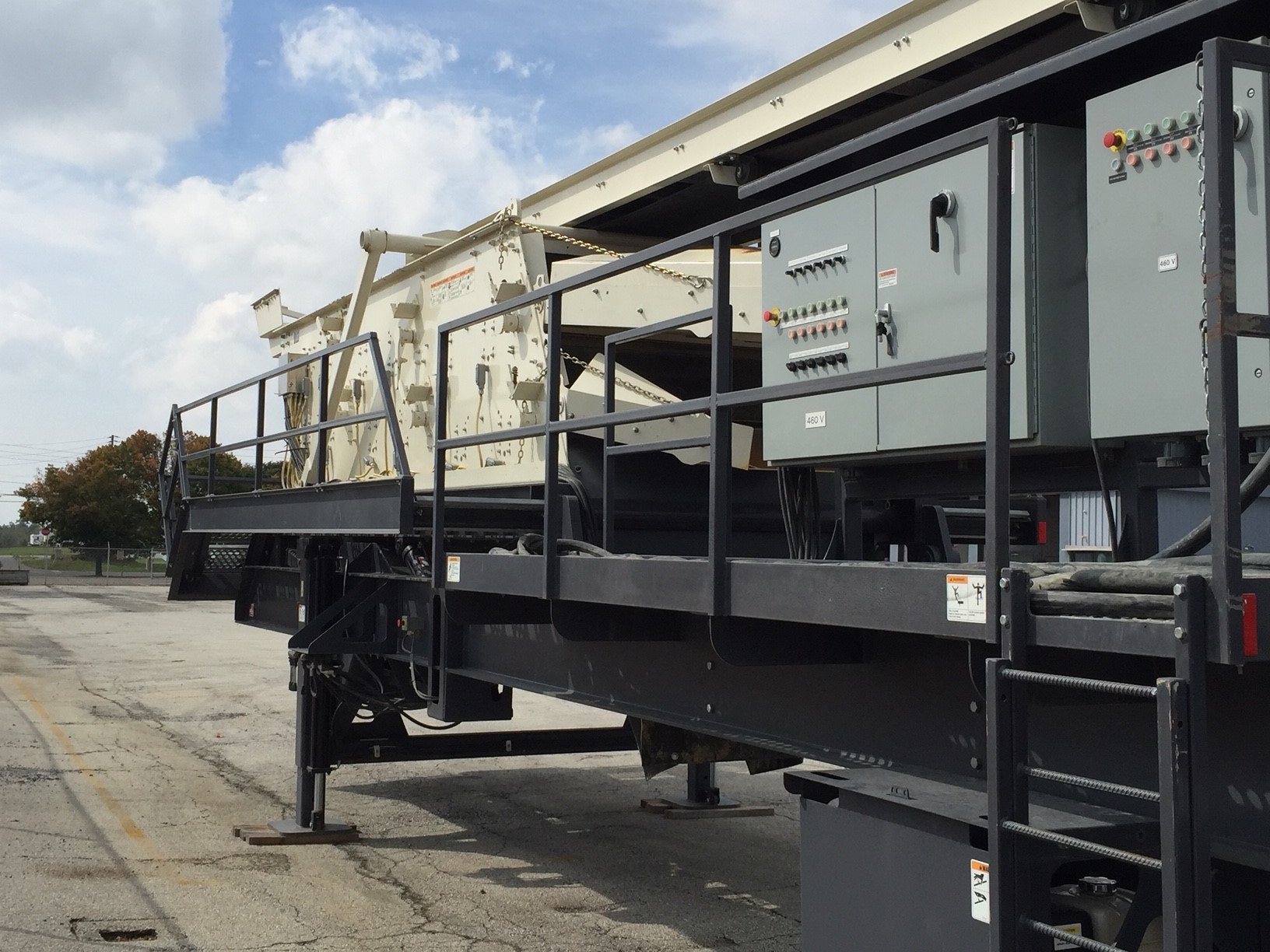
Aggregate screening media are an essential component of many mining and mineral processing operations. If you want efficient and effective screening operations, you need to maintain your screens and ensure they are in the best condition possible. Well-maintained screen media is vital to all screening operations, as they are the surfaces the material is filtered (or sorted) through. Without them, the entire production comes to a halt. Understanding the different screening media types and their proper installation, maintenance, and repair is essential for all screening applications.
At Kemper, we understand that choosing the right screening media can significantly impact your business’s profitability and proficiency. We have the expertise and knowledge you need and are well-equipped to help your business achieve its goals. By combining state-of-the-art technology and decades of industry experience, we are your go-to partner for all your design, manufacturing, and supply of material handling solutions. Learn more about screening media in this piece, and then contact us today for help with all your screening needs!
Types of Screening Media
The most common types of screening media used in the aggregate and mining industries are steel wire, also known as wire cloth, and rubber panels. There are pros and cons to each type of screening media, so it is essential to assess the operation’s needs when deciding which type is suitable for your specific application. For instance, wire cloth will last longer but may be more susceptible to damage and harder on the material than rubber panels. Ultimately, the right screening media depends on the operation requirements.
- Wire Cloth – Featuring high tensile strength and customized wire mesh designs, steel wire screens are essential for separating, sizing, and filtering materials like crushed stone, sand, and gravel. This ensures the production of high-quality construction materials and offers excellent wear life, reducing the need for frequent replacements. Furthermore, with advanced engineering and manufacturing techniques, today’s steel wire screens are highly effective at screening specific-sized particles. They are reliable and cost-efficient, making them a popular choice for businesses in the aggregate processing industry.
- Rubber Panels – These screens have a high-performance design and versatility that make them an ideal choice for various applications within the industry. One of the reasons operators have come to appreciate these screens is their ability to absorb impact with ease while also reducing noise. This ability results in a more pleasant and efficient work environment. Additionally, the durable material of rubber provides an extended wear life compared to metal screens, leading to significant cost savings in the long run because fewer replacements mean fewer costs associated with this screen type.
Wire Cloth vs. Rubber vs. Polyurethane: Comparing Aggregate Screening Equipment Media
Wire cloth and rubber are not your only options. Polyurethane (urethane) is the third major screening media used across aggregate and mineral processing operations, and understanding how all three compare helps you choose the right deck for the job.
Polyurethane panels sit between wire cloth and rubber. Like rubber, the flexible surface flexes under load to shed near-size and sticky material, but the molded urethane openings hold their shape and sizing accuracy far better over their service life. Polyurethane is often the right call when you are screening abrasive or wet, sticky material and want longer wear life than wire cloth without giving up sizing precision. Wire cloth remains the choice for fine, dry, high-accuracy sizing and the lowest up-front cost, while rubber excels where impact and noise are the priority. Use the criteria below to match the media to your specific application rather than defaulting to what is already on the deck.
|
Relative wear life |
Wire cloth typically has the shortest service life, especially in abrasive or high-impact material. Rubber and polyurethane both last considerably longer, with polyurethane generally offering the longest wear life in abrasive and wet applications. Actual life depends heavily on material abrasiveness, feed rate, and moisture. |
|
Open area |
Wire cloth offers the highest open area for a given aperture, which means the most throughput and the finest sizing accuracy. Rubber and polyurethane sacrifice some open area to the thicker deck material and support structure, so a larger overall screen may be needed to match wire cloth capacity. |
|
Minimum practical aperture |
Wire cloth handles the smallest, finest apertures, making it the standard for fine dry sizing. Rubber and polyurethane can be molded to fine openings but are more commonly used from intermediate up to coarse sizing, where their durability pays off. |
|
Noise and impact absorption |
Rubber absorbs impact and dampens noise the best, creating a quieter, more comfortable work environment. Polyurethane also reduces noise and impact well. Wire cloth transmits the most noise and vibration and takes the hardest hits from oversize material. |
|
Blinding and pegging resistance |
Wire cloth is the most prone to blinding and pegging with damp or near-size material. The flexing action of rubber and polyurethane helps release trapped particles, so both resist blinding and pegging far better, with polyurethane commonly chosen for the stickiest, wettest feeds. |
|
Best-fit application |
Choose wire cloth for fine, dry, high-accuracy sizing and lowest initial cost. Choose rubber for high-impact, high-noise coarse applications. Choose polyurethane for abrasive, wet, or sticky material where you want long wear life plus reliable sizing. |
|
Relative cost per panel |
Wire cloth is the lowest up-front cost, which is why it is so widely used. Rubber and polyurethane cost more per panel, but the longer wear life and fewer changeouts often lower total cost per ton over the life of the deck. |
Screening Media Installation and Maintenance
Correct installation and a routine inspection schedule keep your screens sizing accurately and prevent avoidable damage.
Once you have picked the correct type of screening media, installing it correctly and inspecting it on a regular schedule is what protects both the media and the equipment around it. Incorrectly installed or under-tensioned screens can damage the media, wear the support rails and cross members, and quietly degrade sizing accuracy long before the panel looks worn out.
Build inspection into your operating routine rather than waiting for a problem. A quick visual check at the start of each shift catches obvious tears, loose hardware, and material build-up. A more detailed inspection on a weekly basis should cover tension, wear, and the condition of the support structure. Whenever you install new media, re-check tension after the media has run under load for the first time, because hook strips and tensioned wire settle and lose tension after break-in.
Inspect any media for damage before and during installation, and never install damaged media, as it leads to inefficient screening and downstream equipment problems. When checking tension, confirm the media is drawn tight and flat against every support point with no slack sections that flap or drum under load, and re-tension bolts, hook strips, and clamp rails to the manufacturer’s specification for your machine. Watch for the visual wear indicators below, and plan a changeout as soon as sizing accuracy begins to drift rather than running media to failure.
- Start-of-shift visual check Look for tears, worn openings, loose or missing bolts, and material build-up on the deck.
- Weekly detailed inspection Check media tension, wear across the full deck, and the condition of support rails and cross members.
- Re-tension after break-in Re-check and re-set tension after new media has run under load, then routinely thereafter, since hook strips and wire settle.
- Wear indicators to watch Elongated or rounded openings, thinning wire, chamfered rubber or urethane openings, and sharp board edges all signal declining sizing accuracy.
- Media wear life planning Wire cloth wears fastest, especially in abrasive material, while rubber and polyurethane last longer; track how long each deck lasts in your specific material so you can order replacements ahead of failure.
Cleaning and Repairing Screening Media
It is also essential to regularly clean the screening media and inspect and repair it when necessary. When cleaning the media, using a high-pressure washer or a vacuum cleaner is vital to remove dirt, dust, and other material. Additionally, inspecting the media for stretching, tears, and other signs of wear is crucial, as is checking the boards’ edges for sharpness and the tension of the attachment bolts. Take care of any signs of damage immediately to avoid further damage and inefficient operations.
Consider adding screen beater bars to decrease the frequency of cleaning your screens. Screen beater bars are the perfect addition to aggregate screening media. They help knock material loose and can maximize output. The bars are fixed to the screening equipment and shake with it. They feature widely spaced and sloping bars designed to beat the dirt through the media.
The impact of the beater bars agitates and loosens the material, helping to prevent clogging and loss of efficiency in the screening process. Our Screen beater bars are made from heavy duty urethane, and their spacing and length can be customized to suit the particular needs of the screening process. They work to eliminate screen blinding and manual maintenance.
Troubleshooting Screen Blinding, Pegging, and Plugging
Three common problems quietly rob a screen of capacity. Knowing how to tell them apart is the first step to fixing them.
Blinding happens when near-size particles or fine, damp material coat and bridge over the openings, sealing the surface so material rides across the deck instead of passing through. Pegging occurs when near-size particles wedge and lodge in individual openings, plugging them one at a time until open area drops. Plugging is the broader loss of open area as material packs into the openings and builds up on the deck.
All three usually trace back to the same handful of causes: high moisture content, a heavy percentage of near-size material, too little open area for the job, or insufficient tension letting the media flex incorrectly. Diagnose by watching the deck under load: material carrying over with a coated surface points to blinding, individual choked openings point to pegging, and packed sections point to plugging.
As a worked example, an operation screening damp sand may see throughput fall as fines blind a tight wire cloth deck. Switching that deck to a flexible self-cleaning wire tension or to polyurethane media with a slightly larger open area lets the surface flex and release the trapped fines, restoring throughput without changing the crusher or feed.
- Increase open area Move to a larger aperture or higher open-area media so near-size and damp material has room to pass rather than bridging the surface.
- Add self-cleaning wire tension Independently tensioned or self-cleaning wire flexes to knock lodged particles free and reduce pegging.
- Switch to anti-blinding or ski-slope media Flexible rubber or polyurethane, or tapered ski-slope openings, flex under load to shed sticky, near-size material.
- Address moisture Where feasible, use heated decks or manage feed moisture so damp fines stop coating the openings.
- Fit beater bars Heavy-duty urethane beater bars agitate and loosen packed material to prevent blinding and cut manual cleaning.
How Does Screening Media Help Keep Operational Costs Low?
Keeping maintenance costs low in the aggregate industry comes down to catching wear early and planning changeouts before they become emergencies. Repairing or replacing damaged sections on schedule extends equipment life and protects the sizing accuracy your customers pay for. Regular cleaning keeps dirt and near-size material from blinding the deck and causing the uneven wear that shortens media life, and routine inspection lets you spot a small problem before it becomes a costly, time-consuming repair.
The biggest cost in screening is rarely the media itself; it is the unplanned downtime when a worn or torn deck fails mid-shift. Keeping a few replacement panels on hand for the media you wear through fastest turns a potential day of lost production into a short, scheduled changeout. For heavy-duty operations running abrasive material, a spare-panel strategy paired with the inspection routine above means you replace media on your terms, during planned maintenance windows, instead of stopping the plant when a deck lets go. Taking these proactive measures keeps overhead predictable and your cost per ton down.
Do You Need Replacement Aggregate Screening Media or Machinery?
Aggregate screening media is part of many mineral processing operations. Understanding all aspects of your screening media, including how to properly install, maintain, and replace them, is essential to keep your operation running smoothly! If you need help selecting the right aggregate screening media for your process, you need expert installation help or hope to incorporate screening into a new application, contact us today. We can help you with all your screening needs, from replacement parts to a new design for an equipment setup.