
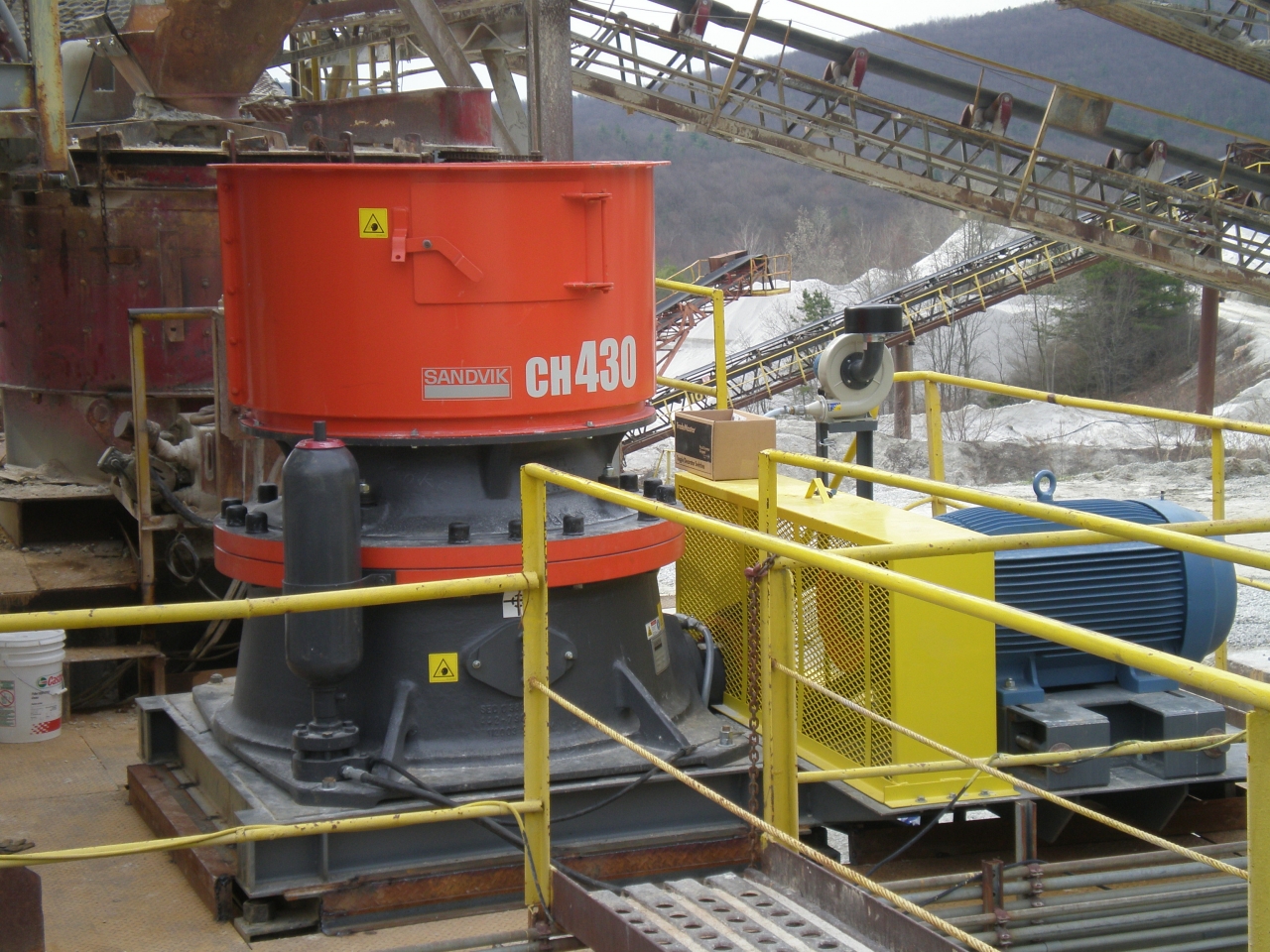
Mining, aggregate and mineral processing, recycling, and other material handling plants usually need to reduce the size of their raw materials to create something sellable. Once their raw material is mined, harvested, or collected, it needs to be broken down into something closer to the end-product.
This is where crushing equipment comes in. Crushers are an important part of a full circuit material handling plant. They’re usually the first or second step, after the raw material arrives.
For the first installation of our Equipment 101 series, we’ll take a look at everything you need to know about crushing equipment. Kemper’s experienced team knows what it takes to turn raw material to a profitable product. Read on to learn more about how crushing equipment fits into material handling, and how Kemper can help:
What is Crushing Equipment?
A crusher is a heavy-duty machine that reduces large pieces of raw material into smaller, more uniform ones by applying force until the material fractures. It’s usually one of the first machines in a material handling plant, taking blasted or mined rock and turning it into a size that later equipment — and ultimately your customers — can actually use.
Crushers apply that force in one of two ways. Compression crushers — like jaw, cone, and gyratory crushers — squeeze material between a moving surface and a fixed one until it breaks. Impact crushers — including horizontal and vertical shaft impactors (VSI) — hurl material against hammers or anvils so it shatters along its natural fracture lines. Compression works best on hard, abrasive rock; impact works best on softer rock and for shaping product like gravel.
Why crushing happens in stages
You rarely take rock from blast size straight to finished product in a single machine. Instead, crushing is done in stages, with each machine handling a slice of the size reduction:
- Primary crushing takes the largest run-of-mine or blasted rock and breaks it down into something the rest of the circuit can handle.
- Secondary crushing takes that output and reduces it further, often producing an intermediate product.
- Tertiary crushing refines the material again to hit tight final sizes and, in many cases, to improve the shape of the finished aggregate.
Each stage is sized around its reduction ratio — the relationship between the size of material going in and the size coming out. A machine with a 6:1 reduction ratio, for example, turns roughly 900 mm feed into about 150 mm product. Because a single crusher can only reduce so far without wearing out or choking, plants chain stages together: a primary might take 900 mm rock down to 150 mm, then a secondary drops that to around 40 mm. Understanding stages and reduction ratios is the key to picking the right crusher — and the right number of them — for the end product you’re trying to sell.
How is Crushing Equipment Used?
Crushing equipment is one of the very first steps for a variety of material handling plants, productions, and jobs. Each job starts with a different material, calling for a different type of crusher. Most crushers function in a similar fashion, but the end products are used for many different applications. Here are just a few industries that use crushers:
- Mining
- Rock Quarries
- Mineral Processing
- Recycling
The mining and quarrying industry is one of the largest users of crushing equipment. Raw material is blasted or harvest from deep underground. For these materials to be profitable, they have to go through an extensive material handling system. The material is moved from the mine, fed into a crusher, than screened to separate the particles. Crushing equipment works hand-in-hand with all of the other machines to produce an end-product – like gravel for roads, salt for winterizing, and more.
The recycling industry also uses crushers to break down glass bottles and containers. After the glass is loaded into a special crusher, it’s crushed into raw material. It’s then melted down and repurposed into recycled glass containers, just for the process to being all over again!
What Does Kemper Do?
Kemper’s team has over 30 years of experience in the material handling industry. Each crusher plays a different role in a job. It’s important to make sure the best crusher is used to create the desired end product. Kemper supplies and installs various types of crushers, including:
- Cone Crushers
- Jaw Crushers
- Split Feed Crushers
- Glass Crushers
- Gyratory Crushers
- Horizontal and Vertical Impactors
- Stone Crushers
Crusher Types Compared: Jaw, Cone, Gyratory, Impact and VSI
Each crusher earns its place in the circuit by handling a specific stage, feed size, and material. Here’s how the main types stack up so you can see where each one fits — and where it doesn’t.
|
Jaw Crusher |
Stage: primary. Handles large feed of roughly up to 1 m with a reduction ratio around 6:1. Built to take the first, roughest cut on blasted rock and hard, abrasive material. Watch out for slabby, flat feed, which can bridge and jam across the jaws. |
|
Gyratory Crusher |
Stage: primary. An alternative to the jaw for high-volume primary duty on hard rock, using a gyrating cone inside a chamber to crush continuously. Suited to large mining and quarry operations that need steady, high throughput at the head of the circuit. |
|
Cone Crusher |
Stage: secondary and tertiary. Reduces the output of a primary into smaller, more uniform product and excels on hard, abrasive rock. Performs best when kept choke-fed (chamber kept full); running it starved wears the liners unevenly and hurts product shape. |
|
Horizontal Impact Crusher |
Stage: primary or secondary on softer material. Uses impact rather than compression, giving a high reduction ratio and a well-graded product in one pass. Best on softer, less abrasive rock and recycling work; abrasive stone wears the hammers and liners quickly. |
|
Vertical Shaft Impactor (VSI) |
Stage: tertiary/shaping. Throws material at high speed to fracture it and, critically, to shape it — turning rough particles into the cubical product prized for concrete and asphalt aggregate. Ideal as the final shaping step rather than for heavy size reduction. |
|
Specialty crushers |
Split feed, stone, and glass crushers cover specific jobs — from splitting feed streams to breaking recycled glass back into raw material — where a standard primary or secondary machine isn’t the right tool. |
How Crushing, Screening and Conveyors Work Together in a Circuit
A crusher never works alone. In a real plant, crushing, screening, and conveying equipment are linked into a circuit that moves material from raw feed to finished stockpile.
Here’s how material typically flows through a crushing-and-screening circuit, from the feed hopper to the stockpile:
- Feeder
Raw material is loaded into a feeder that meters it into the circuit at a steady rate, protecting the crusher from being overwhelmed or starved. - Primary jaw crusher
The feeder delivers large rock to the primary crusher — often a jaw — which takes the first, roughest size reduction, for example from around 900 mm down to about 150 mm. - Conveyor to the next stage
A belt conveyor carries the primary output to the next machine. Conveyors move material between every stage, and on aggregate sites portable and stacking conveyors are used so the layout can be reconfigured or relocated as the pit changes. - Secondary cone crusher
The secondary crusher reduces the material further — for instance from about 150 mm down toward 40 mm — refining it toward saleable sizes. - Screening
A screen separates the crushed material by size. On-size product drops through to be collected, while oversize is diverted for another pass. This is where the circuit’s design really matters. - Closed loop back to the crusher
In a closed circuit, oversize material is returned by conveyor to the crusher to be reduced again, so nothing leaves until it meets spec. In an open circuit, material makes a single pass and any oversize is handled separately. - Stockpile conveyor
Finished product is carried out by a stockpile or radial stacking conveyor and built into stockpiles ready for sale, with throughput across the whole circuit balanced so no single stage becomes a bottleneck.
Our team doesn’t stop and recommending and installing the crusher you choose. We go further by consulting, planning, and designing full circuit systems. Kemper is a full-service material handling supplier capable of designing, building, and even repairing your entire system.