
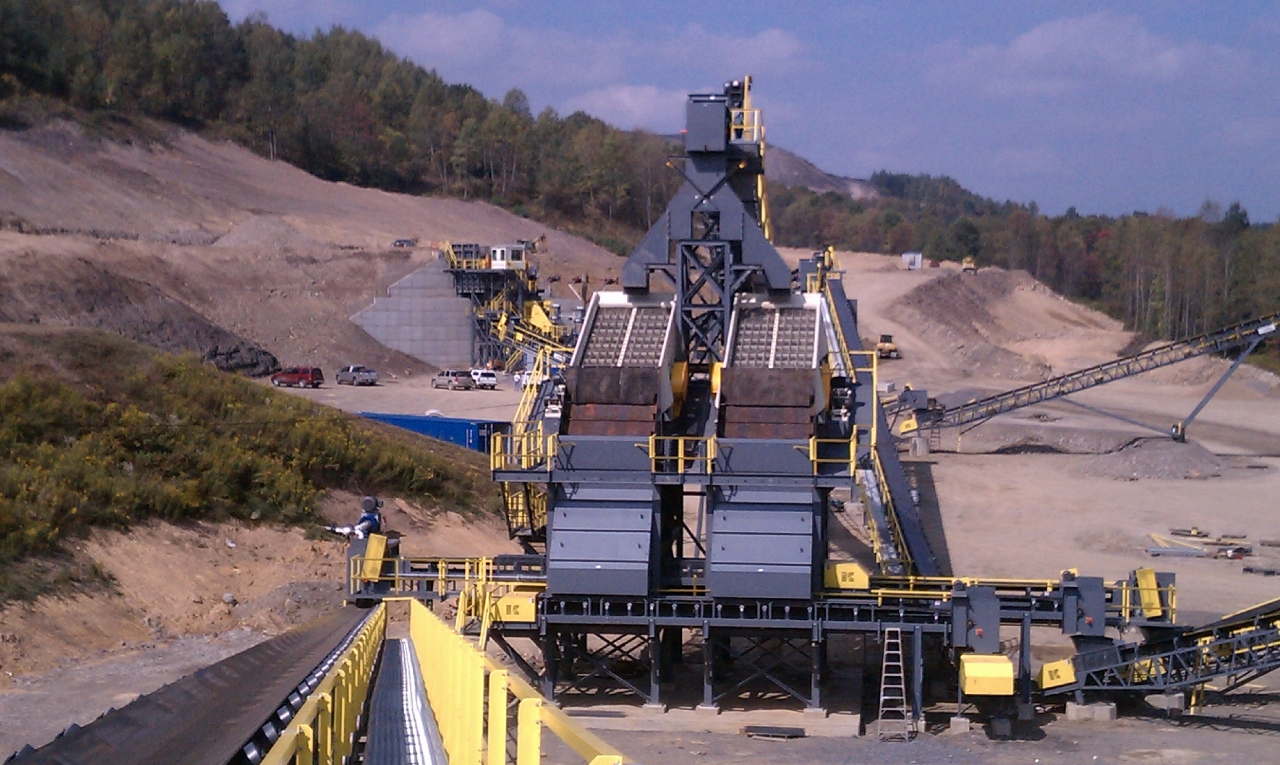
In the mining industry, screening is a crucial step that ensures the efficiency and effectiveness of the entire mineral processing chain. Whether dealing with raw materials or processed ores, the screening process separates different particle sizes, enabling further treatment, transportation, or sales. But what exactly is screening, and how does it support the broader goals of safety, security, and compliance in the field?
Understanding the Screening Process in Mining
At its core, screening in mining involves separating materials based on their size. It can be used for both raw materials and crushed materials, facilitating their classification and further treatment. The screening process allows for extracting valuable minerals from waste materials or smaller particles that would otherwise be difficult to manage.
Screening is not just a simple filtering task. It’s an advanced process involving specialized screening equipment designed to handle high volumes of material. The goal is to ensure that only the desired material sizes pass through, reducing waste and optimizing the efficiency of mining operations.
Types of Screens and Their Applications
Often used with crushing equipment, the screening process is critical in separating finely crushed materials into usable fractions. This process ensures that only the correctly sized materials are sent to the next stage of processing or distribution.
Various types of screens are designed to meet the diverse needs of the industry. Choosing the right screening method can significantly impact productivity, making it essential for companies to understand the different options available. The most common types include:
- Vibrating Screens: Among the most widely used, these screens employ vibration to separate materials by size. The vibrating motion allows for fine particles to move more freely across the screen surface. Vibrating screens are highly effective in dealing with wet and dry materials, making them popular for mineral processing.
- Circular Motion Screens: These screens are known for their circular vibratory motion, facilitating the sorting of small and large particles effectively. Circular motion screens are commonly used when handling heavy materials like ores or rocks. They provide consistent performance, helping to classify crushed materials with precision.
Screening media refers to the type of surface used on the screening equipment, which could vary based on the material being processed. Screening media may include woven wire mesh, rubber, or polyurethane surfaces. The right choice of screening media depends on factors like material hardness, particle size, and moisture content.
Matching the Screen to the Cut Size
Vibrating and circular motion screens cover a lot of ground, but they are not the only options — and the right choice usually comes down to the particle size you are trying to separate. Here are the screen types operators specify most often, with the size window each one handles best.
Grizzly Screens
Used to scalp run-of-mine feed, typically pulling out material above roughly 50mm before it reaches the primary crusher. Available in static (fixed bar) and vibrating variants, grizzlies protect downstream equipment from oversize and sit at the very front of the circuit. Use when you need to remove large rock and fines from raw feed before crushing.
Trommel Screens
A rotating cylindrical drum that tumbles material and separates it through apertures in the drum wall. Trommels handle sticky, wet, and clay-bound material better than flat decks because the tumbling action resists clogging. Common in aggregate washing and topsoil or compost-style separations. Use when the feed is wet or prone to blinding a vibrating deck.
High-Frequency Screens
Built for fine separation, generally below about 5mm, using rapid, low-amplitude vibration applied close to the screen surface. The high frequency keeps fine particles moving and stratifying so they report to the correct fraction. Use when you need a precise fine cut that a conventional vibrating screen struggles to make.
Banana / Multi-Slope Screens
A single deck set at multiple angles — steeper at the feed end, flatter toward the discharge — so material moves fast where the load is heavy and slows down where the fine separation happens. This delivers high throughput across a compact deck. Use when you are moving large tonnages and need capacity without adding deck area.
The Role of Screening in Mineral Processing
The mineral processing stage is where screening becomes indispensable. This part of the process is where the materials are refined, and impurities removed. Screening helps ensure the processed minerals meet specific quality standards before being sent off for further refining or use. Screening equipment used in this phase must be both durable and precise to handle the heavy workloads and diverse particle sizes that arise.
In addition to improving efficiency, screening is crucial in enhancing safety and ensuring compliance with environmental regulations. By separating materials early in the process, mining companies can reduce the risk of accidents or malfunctions during later processing stages. Proper screening processes also minimize the environmental impact of mining by allowing companies to process materials more efficiently, reducing waste and limiting the extraction of unnecessary minerals.
How Crushing and Screening Work Together
In a real operation, crushing and screening are not separate jobs — they run as a single closed circuit. Crushers reduce the material size and screens decide what has been reduced enough to move on and what needs to go back for another pass.
Jaw Crushers
Primary crushing. Handle large, hard feed and take the first, heaviest size reduction. The workhorse at the front of most hard-rock circuits.
Gyratory Crushers
Also a primary crusher, suited to very high-capacity operations taking large run-of-mine feed continuously rather than in a choke-fed cycle.
Cone Crushers
Secondary and tertiary crushing of harder rock. Used after the primary stage to reduce material toward finished product sizes with tighter control.
Impact Crushers
Secondary and tertiary reduction, well suited to softer and medium-hard material, producing a more cubical product favored in many aggregate specs.
Optimizing the Screening Process: Key Considerations
Mining operations rely heavily on efficient and well-maintained screening equipment. Here are some key factors to keep in mind when optimizing the screening process:
- Screen Surface Area: The larger the screen surface, the more material can be processed. Larger screens increase efficiency but may require more space and maintenance.
- Vibration Frequency: The speed and intensity of vibrations in a vibrating screen impact how quickly materials move through the screen and how effectively smaller particles are separated.
- Screen Maintenance: Mining equipment is subject to heavy wear and tear, and screening machines are no exception. Regular maintenance ensures the equipment remains functional and minimizes costly downtime.
- Screening Media Choice: Selecting the appropriate media for the screening equipment is crucial. Harder or more abrasive materials may require stronger mesh or alternative media like polyurethane to ensure longer screen life.
Common Screening Problems and How to Fix Them
Even a well-specified screen runs into predictable trouble on site. Knowing the symptoms — and the fix — keeps throughput up and prevents small issues from becoming downtime.
Blinding
Fine or wet material clogs the screen apertures, blocking particles that should pass through and cutting capacity. Symptoms are falling throughput and material carrying over that should have dropped. Fixes include heated decks to dry sticky feed, ball-tray or slider cleaners that knock the deck clear, and anti-blinding media designed to flex the openings open.
Pegging
Near-size particles wedge tightly into the openings and stay stuck, gradually reducing open area. You will see a screen surface studded with lodged stones and declining efficiency. Ball-tray cleaners, tapered apertures, and choosing a media with the right open area for the feed all help clear and prevent pegging.
Near-Size Material at the Cut Point
When a large share of the feed is very close to the aperture size, particles struggle to find an opening and separation efficiency drops sharply. This is one of the most common reasons a screen underperforms its rating. Adding deck area, adjusting angle and frequency, or splitting the cut across an additional deck all improve the separation.
Media Wear
Screening media takes constant abrasion, and worn openings drift out of spec, letting oversize slip through. Watch for enlarged or rounded apertures and rising oversize in the product. Wire mesh wears fastest and suits precise, less abrasive cuts; polyurethane and rubber last considerably longer under abrasive or heavy loads and are worth the trade-off when media life is the limiting factor.
Advancements in Screening Technology
In recent years, there have been significant advancements in screening technology, with mining companies adopting more efficient and sustainable methods to enhance productivity. Integrating automated screening systems, real-time monitoring, and predictive maintenance has transformed how companies approach the screening process. These innovations reduce human error, optimize material throughput, and ensure the right screening equipment is used at the right time.
Modern screening machines now include more sophisticated sensors and monitoring tools that provide mining operators with real-time data about the performance of their screens. By utilizing this data, companies can make informed decisions on adjusting the screen’s vibration frequency or replacing worn screening media, ultimately saving time and resources.
Trust Kemper for All Your Screening Needs
When optimizing your mining operations, choosing the right screening equipment is critical. With decades of experience, Kemper understands mining companies’ challenges and offers various reliable and durable screening solutions.
Whether you’re looking to enhance efficiency, improve safety, or ensure regulatory compliance, our team of experts guides you every step of the way. Contact Kemper today to learn how we can help you streamline your screening process for maximum productivity with our design and build services. Reach out to us today to get started!